
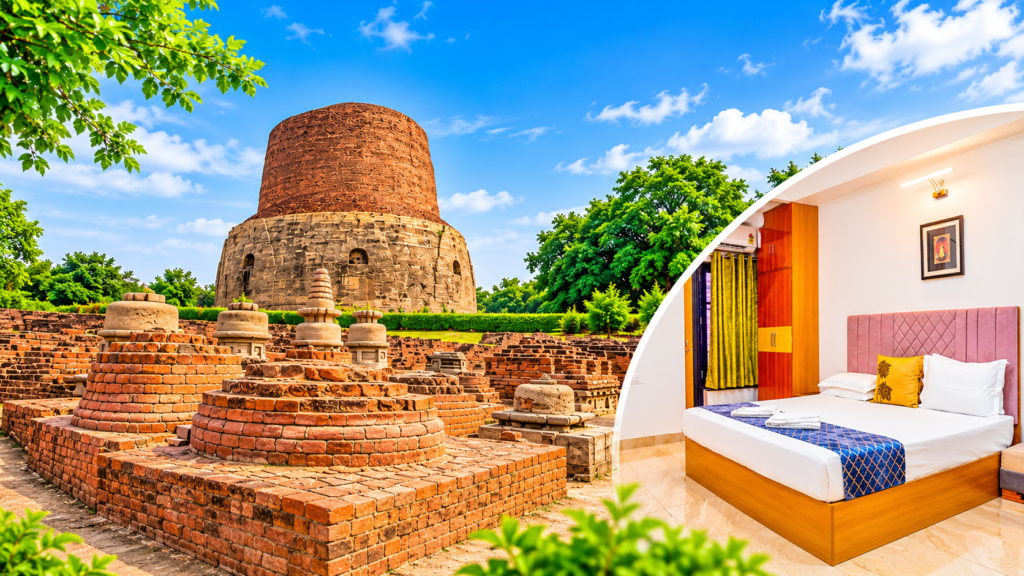
Varanasi is widely known for its ancient temples, sacred ghats and spiritual atmosphere. However, just outside the busy streets of the city lies another remarkable destination that attracts history enthusiasts, Buddhist pilgrims and international travellers: Sarnath.
Located near Varanasi, Sarnath is one of the most important Buddhist pilgrimage destinations in India. It is the place where Gautama Buddha delivered his first sermon after attaining enlightenment, marking the beginning of his teachings and the establishment of the Buddhist Sangha.
From the magnificent Dhamek Stupa and ancient archaeological remains to peaceful Buddhist monasteries and historical museums, there are several fascinating places to visit in Sarnath.
Whether you are planning a spiritual journey, a historical excursion or a family trip to Varanasi, Sarnath deserves a place on your itinerary.
In this guide, we will explore the history of Sarnath, its major attractions, the best time to visit, a suggested half-day itinerary and accommodation options for travellers exploring Varanasi.
History of Sarnath: Why Is It So Important?
Sarnath holds a special place in Buddhist history because it is where Gautama Buddha delivered his first sermon, traditionally known as the Dhammacakkappavattana Sutta, after attaining enlightenment at Bodh Gaya.
According to Buddhist tradition, Buddha travelled to Sarnath to meet five former companions and share his understanding of the Dharma. This event marked the beginning of the Buddhist Sangha, the community of Buddhist monks.
Over the centuries, Sarnath developed into an important centre of Buddhist learning, meditation and pilgrimage. Several monasteries, stupas and religious structures were established here, particularly during the reign of Emperor Ashoka.
Today, Sarnath attracts visitors from countries such as Thailand, Japan, Sri Lanka, Myanmar, Tibet and other parts of the world.
The archaeological remains, ancient sculptures and Buddhist monuments offer a glimpse into India’s rich spiritual and cultural heritage.
7 Best Places to Visit in Sarnath
If you are planning Sarnath sightseeing, these attractions should be included in your travel itinerary.
1. Dhamek Stupa – The Most Famous Attraction in Sarnath
Dhamek Stupa is one of the most significant historical monuments in Sarnath. Its massive cylindrical structure makes it one of the most recognisable landmarks in the area.
The stupa is traditionally associated with the place where Gautama Buddha delivered his first sermon to his five disciples. The present structure is believed to have been developed through several historical phases, with an earlier monument associated with Emperor Ashoka.
Standing approximately 43 metres tall, Dhamek Stupa features beautiful stone carvings and intricate geometric and floral patterns.
Visitors can walk around the monument, observe its architecture and experience the peaceful surroundings.
Why visit?
- Explore one of India’s most important Buddhist monuments.
- Learn about the historical significance of Buddha’s first sermon.
- Admire ancient stone carvings and architecture.
- Experience the peaceful atmosphere of the archaeological complex.
2. Chaukhandi Stupa – An Important Buddhist Historical Site
Chaukhandi Stupa is another important historical monument and one of the notable places to visit in Sarnath.
The structure is believed to commemorate the place where Gautama Buddha met his five disciples after attaining enlightenment.
The original structure dates back to the Gupta period, while the octagonal tower was added later during the Mughal period to commemorate Emperor Humayun’s visit.
Its unique architectural appearance and historical significance make it an interesting stop for travellers exploring Sarnath.
Why visit?
- Discover the historical connection with Gautama Buddha.
- Explore an important Gupta-period monument.
- Learn about the architectural additions made during the Mughal period.
- Capture photographs of this distinctive historical structure.
3. Sarnath Archaeological Museum – Discover Ancient Indian History
The Sarnath Archaeological Museum is an essential destination for anyone interested in Indian history, Buddhist art and ancient sculpture.
Established to preserve archaeological discoveries from Sarnath and its surrounding areas, the museum houses an impressive collection of sculptures, inscriptions and historical artefacts.
One of its most important exhibits is the famous Lion Capital of Ashoka, which was adopted as the national emblem of India.
The museum also displays sculptures from different historical periods, including the Mauryan, Shunga, Kushana and Gupta periods.
Why visit?
- See the original Lion Capital of Ashoka.
- Explore ancient Buddhist sculptures and artefacts.
- Understand the historical development of Sarnath.
- Learn about India’s ancient artistic and architectural traditions.
Visitor information: The museum is generally open from 9:00 AM to 5:00 PM and remains closed on Fridays. Check the official Sarnath Museum website before visiting for updated information.
4. Mulagandha Kuti Vihar – A Peaceful Buddhist Monastery
Mulagandha Kuti Vihar is one of the most beautiful Buddhist religious sites in Sarnath.
Built by the Mahabodhi Society in the early 20th century, this monastery is known for its peaceful atmosphere, impressive architecture and religious significance.
The monastery features beautiful paintings depicting important events from Buddha’s life. Its surroundings provide a calm environment for visitors interested in Buddhist philosophy, meditation and spirituality.
The monastery is also associated with sacred Buddhist relics and attracts devotees from different parts of the world.
Why visit?
- Experience the peaceful environment of a Buddhist monastery.
- Admire beautiful Buddhist paintings and architecture.
- Learn about Buddhist traditions and teachings.
- Spend some quiet time away from the city’s busy surroundings.
5. Thai Temple – Experience Buddhist Culture and Architecture
The Thai Temple, also known as Wat Thai Sarnath, represents the international cultural connections of Sarnath.
Built with support from the Thai Buddhist community, the temple features distinctive Thai architectural elements, beautiful gardens and an impressive standing Buddha statue.
Its landscaped surroundings and peaceful atmosphere make it a pleasant place to explore.
Why visit?
- Experience traditional Thai Buddhist architecture.
- Admire the standing Buddha statue.
- Explore beautifully maintained gardens.
- Learn about the international Buddhist community in Sarnath.
6. Ashoka Pillar – Discover the Origins of India’s National Emblem
The Ashoka Pillar is another historically important attraction associated with Sarnath.
Emperor Ashoka erected the pillar during the Mauryan period, and it became an important symbol of Buddhist heritage.
The original Lion Capital, which once crowned the pillar, is now preserved inside the Sarnath Archaeological Museum and serves as the inspiration for India’s national emblem.
The remains of the pillar at the archaeological site provide visitors with an opportunity to understand the region’s ancient history and connection with Emperor Ashoka.
Why visit?
- Discover the historical legacy of Emperor Ashoka.
- Learn about the origins of India’s national emblem.
- Explore one of the most important archaeological discoveries in Sarnath.
7. Deer Park – Experience the Spiritual Significance of Sarnath
Deer Park, traditionally associated with the ancient Isipatana or Rishipattana, is an important part of Sarnath’s Buddhist heritage.
It is believed to be the place where Buddha delivered his first sermon and began sharing his teachings with the world.
The peaceful surroundings and green spaces make this area an excellent place for visitors seeking a quieter experience.
Why visit?
- Understand the connection between Sarnath and Buddha’s first sermon.
- Explore the historical significance of the Deer Park.
- Enjoy a peaceful environment.
- Experience the spiritual atmosphere of this Buddhist pilgrimage destination.
Best Time to Visit Sarnath
The best time to explore Sarnath is generally between October and March, when the weather in Varanasi is comparatively pleasant.
During these months, visitors can comfortably explore the archaeological sites, monasteries and historical attractions.
Winter Season (October to February)
Winter is a popular time for sightseeing in Sarnath. The pleasant daytime weather makes it suitable for exploring historical monuments and Buddhist temples.
Spring Season (March)
March can also be a good time to visit, especially for travellers planning a short sightseeing trip.
Summer Season (April to June)
Summers in Varanasi can be extremely hot. If visiting during this period, plan your sightseeing during the early morning hours and carry water, sunscreen and comfortable clothing.
Monsoon Season (July to September)
Monsoon brings rainfall and increased humidity. The surrounding greenery can make the area attractive, but visitors should check weather and road conditions before planning their trip.
Travel tip: Early morning visits are recommended for a more comfortable sightseeing experience, especially during warmer months.
Sarnath Half-Day Sightseeing Itinerary
If you have limited time in Varanasi, you can explore the major attractions of Sarnath in approximately half a day.
Here is a suggested itinerary:
| Suggested Time | Attraction | Experience |
|---|---|---|
| 8:00 AM | Chaukhandi Stupa | Explore the historical monument |
| 8:45 AM | Dhamek Stupa | Discover Buddha’s first sermon site |
| 9:30 AM | Ashoka Pillar and archaeological remains | Explore ancient Buddhist ruins |
| 10:15 AM | Sarnath Archaeological Museum | Discover historical artefacts |
| 11:15 AM | Mulagandha Kuti Vihar | Visit the peaceful monastery |
| 12:00 PM | Thai Temple | Experience Buddhist architecture |
This is a suggested sightseeing sequence, not a fixed official schedule. Actual visiting hours and travel time between attractions may vary. Check the museum’s weekly closure before planning your visit.
If you want to explore the monasteries and surrounding attractions at a relaxed pace, consider extending your visit.
How Far Is Sarnath from The Red Napkin?
For travellers staying in Varanasi, Sarnath is a convenient destination for a half-day sightseeing excursion.
According to the distance information displayed on The Red Napkin website, Sarnath is approximately 8 km from the stay. Actual road distance and travel time can vary depending on the selected property, starting point, route and traffic conditions.
Visitors can consider the following transportation options:
- Private Taxi: A convenient option for families and groups who prefer comfortable transportation.
- Auto-Rickshaw: Suitable for shorter local journeys.
- E-Rickshaw: An option for local travel, depending on route availability.
- Private Vehicle: Useful for travellers planning to explore multiple attractions around Varanasi.
If you are visiting several destinations during your trip, planning transportation in advance can make sightseeing more convenient.
Where to Stay in Varanasi While Visiting Sarnath?
Planning accommodation is an important part of any Varanasi trip, especially when you want to explore both the city’s famous temples and nearby historical attractions.
Travellers can choose from hotels, guest houses, homestays, bed and breakfast accommodations and serviced apartments depending on their budget, group size and duration of stay.
For families, business travellers and visitors planning an extended trip, a furnished serviced apartment can be a practical alternative to a conventional hotel room.
The Red Napkin offers furnished accommodation options in Varanasi for travellers looking for a comfortable place to stay while exploring the city.
Here are some factors to consider when choosing your accommodation:
1. Choose Spacious Accommodation for Family Trips
Families travelling together may prefer apartments with separate living and sleeping spaces rather than booking multiple hotel rooms.
2. Consider Kitchen and Dining Facilities
Having access to kitchen and dining facilities can be convenient for families, senior citizens and guests staying for several days.
3. Check Accessibility to Major Attractions
Choose accommodation that makes it convenient to plan visits to Sarnath, Kashi Vishwanath Temple, the Ganga Ghats and other popular destinations.
4. Compare Hotels and Serviced Apartments
Before booking, compare room sizes, amenities, privacy, housekeeping and overall costs.
You can read our guide on hotel vs serviced apartment in Varanasi to understand the differences and choose the accommodation that suits your travel requirements.
If visiting Kashi Vishwanath Temple is also part of your itinerary, explore our guide to comfortable accommodation for Varanasi sightseeing.
Experience a Comfortable Stay at The Red Napkin
After exploring the historical attractions of Sarnath, return to a comfortable and welcoming space in Varanasi.
The Red Napkin provides furnished accommodation options designed for travellers who value space, convenience and a relaxed stay.
Whether you are visiting Varanasi with family, planning a pilgrimage or staying for an extended period, you can explore our serviced apartment in Varanasi to find an accommodation option that matches your requirements.
For booking enquiries and property details, contact The Red Napkin.
Other Places to Explore During Your Varanasi Trip
Sarnath is just one of the many destinations worth exploring during your visit to Varanasi.
Depending on your available time, you can also consider visiting:
- Kashi Vishwanath Temple: One of the most revered Hindu temples dedicated to Lord Shiva.
- Dashashwamedh Ghat: Famous for its evening Ganga Aarti.
- Assi Ghat: A popular riverside destination known for its spiritual and cultural atmosphere.
- Ramnagar Fort: A historic fort associated with the Maharaja of Banaras.
- Chunar Fort: A historic fort overlooking the Ganga, located near Mirzapur.
Exploring these destinations can help you experience the historical, spiritual and cultural diversity of the region.
Frequently Asked Questions About Sarnath
1. What is Sarnath famous for?
Sarnath is famous as the place where Gautama Buddha delivered his first sermon after attaining enlightenment. It is one of the most important Buddhist pilgrimage destinations in India.
2. What are the best places to visit in Sarnath?
Some of the best places to visit in Sarnath include Dhamek Stupa, Chaukhandi Stupa, Sarnath Archaeological Museum, Mulagandha Kuti Vihar, Thai Temple, Ashoka Pillar and Deer Park.
3. How much time is required to explore Sarnath?
Approximately 3–4 hours are generally sufficient to explore the major attractions in Sarnath. Visitors interested in museums, monasteries and additional historical sites may prefer spending half a day.
4. How far is Sarnath from Varanasi?
Sarnath is approximately 10–13 km from central Varanasi, depending on the starting point and route. Travelling by road generally takes around 30–60 minutes, depending on traffic.
5. Is Sarnath worth visiting during a Varanasi trip?
Yes. Sarnath is an excellent destination for anyone interested in Buddhist history, ancient architecture, spirituality and Indian heritage. Its peaceful atmosphere also offers a different experience from the busy streets and ghats of Varanasi.
6. What is the best time to visit Sarnath?
October to March is generally considered a comfortable period for sightseeing because of the relatively pleasant weather.
7. Is the Sarnath Archaeological Museum open every day?
No. The Sarnath Archaeological Museum generally remains closed on Fridays. Its usual visiting hours are 9:00 AM to 5:00 PM. Visitors should verify the latest information before travelling.
8. Where should I stay when visiting Sarnath and Varanasi?
You can choose from hotels, guest houses, homestays and serviced apartments in Varanasi. The right option depends on your budget, group size, preferred amenities and length of stay.
The Red Napkin offers furnished serviced apartment options for visitors looking for comfortable accommodation in Varanasi.
Plan Your Varanasi Visit with The Red Napkin
From the ancient Buddhist heritage of Sarnath to the spiritual charm of Kashi Vishwanath Temple and the beautiful Ganga Ghats, Varanasi offers an unforgettable travel experience.
Choosing suitable accommodation can make your journey more convenient and relaxing.
If you are planning a family holiday, pilgrimage or extended visit, explore the furnished accommodation options at The Red Napkin.
Discover a comfortable place to stay while exploring the history, culture and spiritual heritage of Varanasi.