
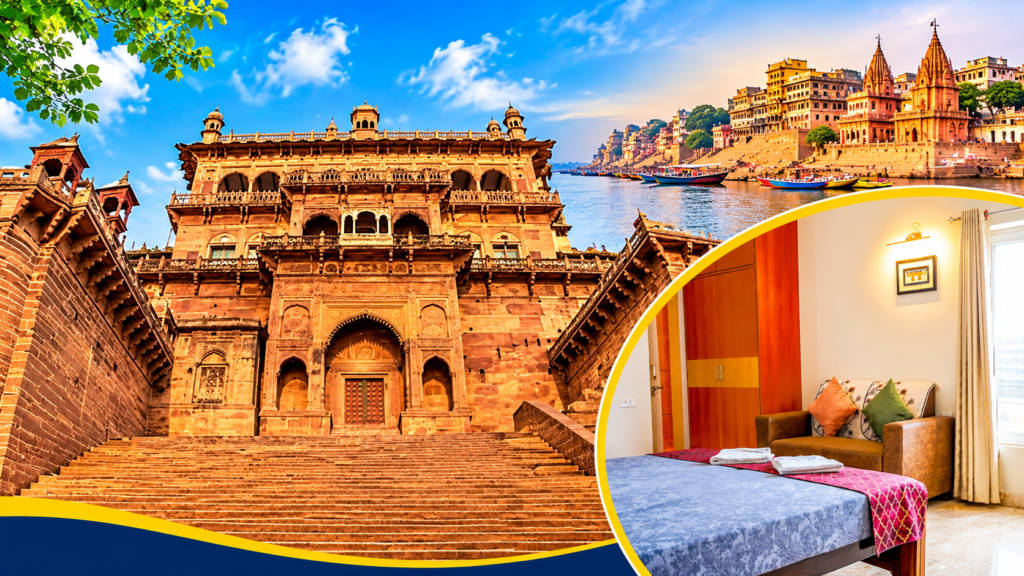
Varanasi is known for its ancient temples, sacred ghats and spiritual traditions, but the city also has a fascinating royal history. One of the best places to explore this heritage is Ramnagar Fort Varanasi, a historic palace located on the eastern bank of the River Ganga.
Built in the 18th century, Ramnagar Fort was the residence of the Maharaja of Banaras, also known as the Kashi Naresh. Today, the fort is recognised for its distinctive architecture, royal museum, vintage vehicles, historical weapons, royal costumes and remarkable astronomical clock.
Whether you are interested in history, architecture, photography or cultural experiences, Ramnagar Fort offers a different perspective on Varanasi beyond its famous temples and ghats.
In this travel guide, discover the history of Ramnagar Fort, museum attractions, visiting timings, nearby places and how to reach the fort from the main city.
1. History of Ramnagar Fort Varanasi
Ramnagar Fort has an important place in the royal history of Varanasi. The fort was constructed in the 18th century by Maharaja Balwant Singh, the ruler of Banaras and an important figure in the history of the Kashi Naresh dynasty.
Located on the eastern bank of the River Ganga, opposite Tulsi Ghat, the fort served as the royal residence of the Maharaja of Banaras.
The fort is traditionally associated with the Kashi Naresh, the hereditary rulers of the Banaras region. Its location beside the river and its fortified structure reflect the historical importance of Ramnagar as a royal settlement.
Over the years, the fort became a centre of royal administration, cultural traditions and religious activities. It continues to preserve a collection of objects associated with the royal family and the history of Banaras.
Why Is Ramnagar Fort Famous?
Ramnagar Fort is known for several historical and cultural features:
- Its association with Maharaja Balwant Singh and the Kashi Naresh.
- Its 18th-century architecture and riverside location.
- The royal museum and collection of historical objects.
- Vintage cars, royal palanquins and traditional costumes.
- Antique weapons and armour.
- A unique astronomical clock.
- Its association with the famous Ramnagar Ramlila.
For visitors exploring Varanasi’s heritage, the fort offers an opportunity to understand the city’s royal past.
2. Architecture of Ramnagar Fort
Ramnagar Fort is an impressive example of historic palace architecture. Built primarily with sandstone, the structure combines fortified walls, large gateways, courtyards and traditional architectural details.
Its location on the eastern bank of the Ganga makes the fort particularly distinctive. Visitors can enjoy views of the river and the surrounding landscape from different sections of the complex.
Key Architectural Features
Red Sandstone Construction
The fort is known for its sandstone structure, which gives the building its distinctive appearance and reflects the architectural traditions of its period.
Large Gateways and Fortified Walls
The fort’s imposing entrance and defensive walls reflect its original role as a royal residence and fortified complex.
Palace Courtyards
The inner courtyards and open spaces provide a glimpse into the layout of the historic royal residence.
Religious Structures
The fort complex also includes temples associated with Hindu religious traditions, adding to its cultural importance.
The architecture, historical collections and riverside setting make Ramnagar Fort an interesting destination for heritage enthusiasts.
3. Ramnagar Fort Museum: What Can You See Inside?
One of the main attractions of Ramnagar Fort is its museum, which preserves objects associated with the royal family of Banaras.
The museum offers visitors a closer look at royal lifestyles, traditional craftsmanship, historical transport and the cultural heritage of the region.
Some of its notable collections include:
1. Vintage Cars and Royal Vehicles
The museum displays vintage vehicles that reflect the royal family’s historical lifestyle and interest in automobiles.
These collections are among the most interesting exhibits for visitors who enjoy seeing classic vehicles and historical objects.
2. Royal Palanquins
Royal palanquins, also known as palkis, form an important part of the museum’s collection. These traditional modes of transport were used during royal occasions and ceremonial processions.
Some examples feature detailed craftsmanship and decorative designs.
3. Royal Costumes and Textiles
The museum preserves traditional royal clothing, textiles and brocade garments associated with the Banaras royal family.
These exhibits offer a glimpse into the clothing traditions, weaving heritage and ceremonial culture of the region.
4. Historical Weapons and Armour
Visitors can explore a collection of swords, guns, armour and other historical weapons.
The collection reflects the military and ceremonial aspects of the royal household.
5. Antique Astronomical Clock
One of the most distinctive attractions inside Ramnagar Fort is its astronomical clock.
Unlike an ordinary clock, this historic timepiece displays additional information such as the year, month, week and day, along with astronomical details relating to the Sun, Moon and planets.
It is one of the most unusual historical exhibits associated with the fort.
6. Manuscripts, Paintings and Royal Objects
The museum also preserves manuscripts, paintings, decorative objects, historical records and other artefacts connected with the royal family’s heritage.
Visitor tip: Museum displays and visitor access may change. Follow the instructions provided by the museum staff, particularly regarding photography and restricted areas.
4. Ramnagar Fort Timings and Entry Information
Before visiting Ramnagar Fort, it is advisable to check the latest museum opening schedule and entry arrangements.
Different official tourism and government sources currently publish different visiting hours. The Incredible India listing gives general hours of 10:00 AM to 5:00 PM, while the Kashi official portal lists 9:30 AM to 5:30 PM.
The Uttar Pradesh NRI Department also publishes seasonal museum timings and lists closures on specific festival dates.
For planning purposes, use the following as a general guide rather than a guaranteed schedule:
| Visitor Information | Details |
|---|---|
| General Opening Window | Around 9:30–10:00 AM |
| General Closing Window | Around 5:00–5:30 PM |
| Recommended Visit Duration | Approximately 1.5–2 hours |
| Location | Ramnagar, Varanasi |
| Best Time of Day | Morning or early afternoon |
Important: These are indicative timings. The museum may have seasonal schedules or special closures, including around Dussehra and Muharram. Confirm the latest timings and entry fee before visiting.
For updated information, refer to:
- Incredible India – Ramnagar Fort
- Kashi Official Portal – Ramnagar Fort Museum
- Uttar Pradesh Government – Museum Information
5. Ramnagar Ramlila: A Unique Cultural Experience
Ramnagar is also famous for its traditional Ramlila, a cultural and religious event associated with the celebration of Lord Rama’s life.
The Ramnagar Ramlila is traditionally organised during the period leading up to Dussehra. Unlike many stage performances, it takes place across different locations in Ramnagar, with audiences following the episodes at their respective settings.
The performances are deeply connected with the religious and cultural traditions of the region. The royal heritage of Ramnagar Fort adds to the atmosphere of this historic celebration.
Why Should You Experience Ramnagar Ramlila?
- It is a longstanding cultural tradition of the region.
- Different episodes of the Ramayana are performed at designated locations.
- It attracts devotees, local residents and visitors.
- It provides an opportunity to experience the traditional cultural life of Ramnagar.
If you are planning to visit Varanasi around Dussehra, check the annual Ramlila programme and local arrangements in advance. The schedule, performance locations and crowd conditions may vary.
6. Temples and Places to Visit Near Ramnagar Fort
A visit to Ramnagar Fort can be combined with nearby religious and cultural attractions. If you have additional time, consider exploring these places.
1. Ved Vyas Temple
The Ved Vyas Temple is associated with Maharishi Ved Vyas, traditionally regarded as the author of the Mahabharata.
Located within the Ramnagar Fort complex, it is an important religious attraction for visitors interested in Hindu traditions.
2. Durga Temple
Durga Temple is another religious site associated with the Ramnagar area. Devotees visit the temple to worship Maa Durga.
3. Chhinnamastika Temple
Chhinnamastika Temple is also located in Ramnagar and is associated with the worship of Goddess Chhinnamasta.
These temples can be included in a heritage and religious sightseeing plan around the fort.
4. Tulsi Ghat
Tulsi Ghat is located on the western bank of the Ganga, opposite Ramnagar Fort.
The ghat is associated with Goswami Tulsidas and the cultural and religious history of Varanasi. Visitors can enjoy the riverfront atmosphere and views towards the fort.
5. Assi Ghat
Assi Ghat is one of the well-known ghats of Varanasi. It is popular among visitors for morning activities, riverside walks and cultural experiences.
You can combine Assi Ghat with a visit to Ramnagar Fort, depending on your route and available time.
6. Banaras Hindu University
Banaras Hindu University is one of the most recognised educational institutions in India. Its campus includes the New Vishwanath Temple and Bharat Kala Bhavan Museum.
Visitors interested in architecture, history and culture can include the university campus in a wider Varanasi sightseeing itinerary.
7. How to Reach Ramnagar Fort from Varanasi
Ramnagar Fort is situated on the eastern bank of the Ganga, opposite the ghats of Varanasi. Visitors can reach it by road or explore a river crossing by boat, subject to local availability and operating conditions.
By Road
Travelling by road is a convenient option for families and visitors who prefer direct transport.
You can hire a private taxi, book a cab or use a local auto-rickshaw, depending on your starting point. The route generally involves crossing the Ganga through a bridge before reaching Ramnagar.
By Boat
A boat ride across the Ganga can offer a scenic approach to Ramnagar Fort.
Visitors may explore boat options from suitable ghats on the Varanasi side. Availability, departure points, fares and river conditions should be confirmed locally.
A boat journey can be a memorable addition to your sightseeing experience, but it should not be treated as a guaranteed transport service.
By Train
Varanasi Junction is the main railway station for visitors arriving by train. From the station, you can hire a taxi or use local transport to reach Ramnagar Fort.
By Air
The nearest airport is Lal Bahadur Shastri International Airport, Varanasi. From the airport, visitors can hire a taxi to reach Ramnagar.
8. Distance Between Ramnagar Fort and The Red Napkin
According to the existing homepage information, Ramnagar Fort is approximately 14 km from The Red Napkin.
This makes the fort a possible sightseeing destination for visitors staying at The Red Napkin’s furnished accommodation in Varanasi.
However, the actual distance and travel time can vary depending on which property you choose, the route and current traffic conditions.
If Ramnagar Fort is part of your Varanasi itinerary, it is a good idea to plan your visit in advance and check the route from your selected accommodation.
9. Best Time to Visit Ramnagar Fort
The best time to explore Ramnagar Fort depends on your travel preferences and the type of experience you want.
October to March
These months generally offer more comfortable weather for exploring the fort, museum and nearby attractions.
The cooler temperatures make it easier to spend time outdoors and combine the visit with other sightseeing locations.
April to June
Summer temperatures in Varanasi can become very high. If visiting during this period, consider going in the morning and carrying drinking water.
July to September
Monsoon brings rainfall and increased humidity. Check local weather conditions before planning a visit, particularly if you intend to travel by boat.
During the Ramnagar Ramlila
Visitors interested in local culture may prefer travelling during the Ramlila season around September–October, subject to the annual programme.
This period can be crowded, so allow additional time for travel and local movement.
10. Suggested Half-Day Itinerary for Ramnagar Fort
If you want to explore Ramnagar Fort and nearby attractions without rushing, a half-day plan can be a good option.
| Time | Suggested Activity |
|---|---|
| 9:30 AM | Depart from your accommodation in Varanasi |
| 10:00 AM | Arrive at Ramnagar Fort |
| 10:00–11:30 AM | Explore the fort and museum |
| 11:30 AM–12:00 PM | Visit the temples within the complex |
| 12:00–1:00 PM | Explore nearby attractions, depending on time |
| 1:00–2:00 PM | Lunch and return towards the main city |
This is a suggested schedule. Actual timings depend on museum opening hours, transport and how much time you spend at each attraction.
11. Where to Stay in Varanasi for Sightseeing?
When planning a Varanasi trip, accommodation is an important part of the overall travel experience.
Visitors often explore several attractions across the city, including temples, ghats, museums and historical landmarks. Choosing accommodation based on your travel duration, group size and preferred facilities can make your stay more convenient.
If you are travelling with family or staying for multiple days, a serviced apartment may be an option worth considering.
You can read more about how to choose the right accommodation in Varanasi before finalising your booking.
Explore Furnished Accommodation at The Red Napkin
The Red Napkin offers serviced-apartment accommodation in Varanasi for visitors looking for furnished living spaces during their stay.
Whether you are visiting for sightseeing, a family trip or an extended stay, explore the available properties and compare their details before making a decision.
You can explore furnished accommodation in Varanasi at Gulmohar and review the property information to understand whether it suits your requirements.
For property details and booking enquiries, check accommodation availability with The Red Napkin.
12. Frequently Asked Questions About Ramnagar Fort Varanasi
Q1. Where is Ramnagar Fort located?
Ramnagar Fort is located in Ramnagar on the eastern bank of the River Ganga in Varanasi, Uttar Pradesh. It stands opposite Tulsi Ghat.
Q2. Who built Ramnagar Fort?
Ramnagar Fort was built in the 18th century by Maharaja Balwant Singh, the ruler of Banaras and an important figure in the history of the Kashi Naresh dynasty.
Q3. What are the timings of Ramnagar Fort?
Published timings vary across official sources. The Incredible India listing gives 10:00 AM to 5:00 PM, while the Kashi official portal lists 9:30 AM to 5:30 PM. Check the latest museum schedule before visiting.
Q4. What can I see inside Ramnagar Fort Museum?
The museum displays royal collections such as vintage vehicles, palanquins, traditional costumes, textiles, historical weapons, manuscripts, paintings and an astronomical clock.
Q5. How far is Ramnagar Fort from Varanasi?
The Varanasi district administration lists Ramnagar as approximately 14 km from Varanasi. The actual road distance depends on the starting point and route.
Q6. Can I reach Ramnagar Fort by boat?
Yes, visitors can explore boat travel across the Ganga from suitable ghats, subject to local availability and river conditions. Road travel is another option.
Q7. How much time is required to explore Ramnagar Fort?
Around 1.5 to 2 hours can be a reasonable starting estimate for exploring the fort and museum. Allow more time if you want to visit nearby temples or attend a cultural event.
Q8. What is Ramnagar Ramlila famous for?
Ramnagar Ramlila is a traditional cultural and religious performance based on the Ramayana. It is organised during the period leading up to Dussehra and is an important part of Ramnagar’s cultural heritage.
Q9. What are the places to visit near Ramnagar Fort?
Popular nearby attractions include Ved Vyas Temple, Durga Temple, Chhinnamastika Temple, Tulsi Ghat, Assi Ghat and Banaras Hindu University.
Q10. Where can I stay while visiting Ramnagar Fort?
Visitors can choose from hotels, guest houses and serviced apartments in Varanasi. The Red Napkin offers furnished serviced-apartment options for visitors planning sightseeing and extended stays.
Explore the Heritage of Varanasi with a Comfortable Stay
Ramnagar Fort is one of the most interesting historical attractions in Varanasi. Its royal collections, distinctive architecture, astronomical clock and connection with the Kashi Naresh make it an important destination for anyone interested in the city’s cultural heritage.
You can combine your visit with nearby temples, ghats and other sightseeing locations to experience a different side of Varanasi.
If you are planning a trip, explore the furnished accommodation options at The Red Napkin and check accommodation availability for your preferred travel dates.